

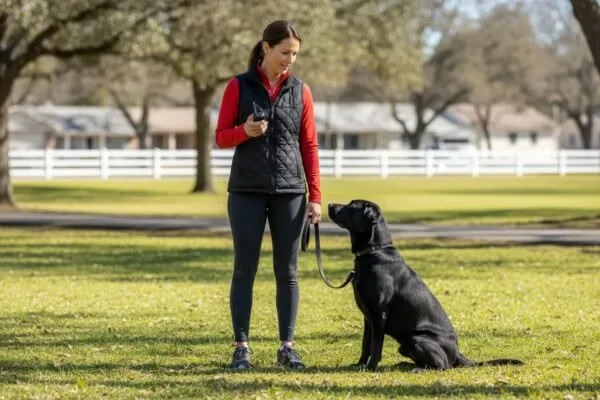
A peaceful walk can quickly become frustrating when a puppy pulls toward every sound, person, or interesting smell. Leash skills do not usually appear automatically, because walking beside a person requires a dog to manage distractions while paying attention to the handler. Building those habits gradually can make walks safer, calmer, and more enjoyable. The key is teaching the dog what behavior works rather than simply reacting whenever pulling begins.
Why Leash Walking Can Be Difficult
When a dog walks on a leash, it does not have the freedom to explore and find out what’s going on around it. Familiar and unfamiliar strangers, animals, and other smells can all vie with the person for attention.
A puppy might also not realize that it is important for them to be close to his/her owner. Once the puppy is able to get something interesting every time he pulls, the behavior can be repeated to make it more rewarding.
That’s why leash training dog classes can be helpful. A structured environment provides opportunities for owners to practice and to be guided in timing, positioning, distractions, and responses.
Start With Manageable Expectations
Many dog owners assume that a dog will walk from the start. It’s better to develop the skill in small increments.
Begin somewhere with not too many distractions, and praise when the dog’s mind is on the task and not on the distraction, and when the dog is moving around the handler calmly. As those behaviors become more consistent, the environment can be increasingly increased.
If a puppy is having trouble concentrating on a noisy sidewalk, for instance, he can begin by focusing on a less chaotic one. If it’s too fast, it can be more challenging for the puppy to be successful.
Reward the Behavior You Want
Dogs will respond to positive behavior with rewards when working on the leash, making leash training easier to understand. Owners can reinforce when they are walking near them, responding to a cue or giving them something willingly.
Timing matters. When the reward follows the behavior a long time later, it may not be clear to the dog why he is being rewarded.
Rewards may be different in different circumstances. What works for one person might not work for another, whether it’s food or praise or moving or having access to an interesting smell.
What Puppies Can Learn in Classes
Puppy leash training classes can offer a safe environment for puppies to learn how to walk on leash with distracting stimuli. Puppies can be trained to be with their handlers, obey commands, and be interested when a dog or person is present.
Classes also provide owners an opportunity to learn to recognize behaviors they might not notice while they’re just walking. If a puppy pulls on the leash, for instance, if the leash is continually pulled tight, it can become a habit of pulling and tension.
Being able to act sooner and more calmly will enhance the effectiveness of practice.
Avoid Practicing Only on Difficult Walks
Many people make the mistake of training their dogs to only pull when it’s a walk. The dog could also be very excited at this stage and less responsive to the situation.
Easier practice sessions can be done first, with a foundation being built. The owners can then add in more distractions gradually.
It can also help maintain some walks on an exploration basis and not as an obedience walk. Dogs require physical activity, sniffing and exploration of the environment in an appropriate way.
Keep Everyone Consistent
Different members of the family having different expectations around the leash can make it confusing. If one person pulls on the dog towards interesting objects while another keeps the dog close, the dog gets dual messages.
All should have an understanding of the basic training approach and utilize the same cues and responses. Not all walks have to be the same, but most of the expectations should be prominent.
Know When Guidance Can Help
Other dogs may practice but still be in pain, especially if exercise is a great deal more difficult when there are lots of distractions, or there is a lot of excitement. Walking behavior can be observed by a trainer, and this can help to identify where the training process needs to be adjusted.
Owners can also help themselves avoid bad habits and not know that they are causing a problem for months, with professional help.
Conclusion
A few things can be done to improve leash walking, such as slowly building up to it, setting clear expectations, providing reinforcement and handling it consistently. Puppies can benefit most when their skill is developed in manageable environments first before adding more distracting environments. Well-organized classes can be helpful not only for dogs to get feedback, but also for owners to get feedback while helping their dog. For more tips on how to train your dog to walk more calmly, you can check out CanineMoxy.com for expert advice and training choices.