

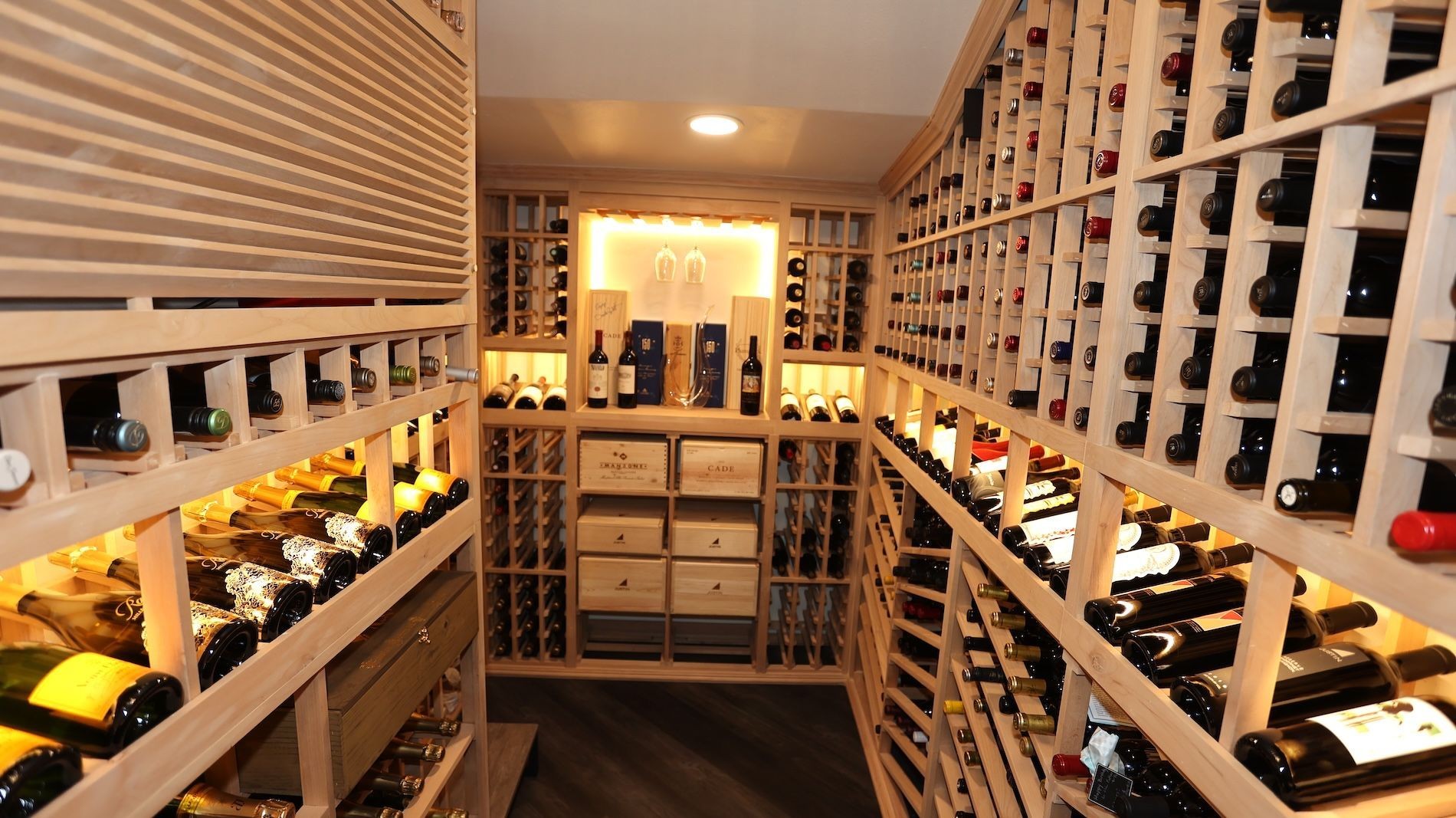
Most people begin wine cellar design by picking a style. Dark wood or glass? An arched door or a flat one? It feels like the fun part, and it is. But the cellars that still work well fifteen years on were usually shaped by a handful of unglamorous decisions made long before anyone chose a finish. Here are the questions worth answering first, in the order that tends to save the most regret.
Start With the Bottles, Not the Room
Count what you own today, then add what you’ll realistically buy over the next ten years. Collections grow faster than owners expect, and a room sized for 300 bottles often feels full by year three. Aim for about a third more capacity than your current count, even if it feels like too much right now.
Bottle shapes matter too. Magnums, sparkling wine and wide-shouldered Burgundy bottles each need larger slot’s than a standard Bordeaux. Squeezing them into regular racks wastes space and can scuff labels. Note the odd sizes now, so the layout can set aside proper room for them instead of improvising later.
Judge a Space by Its Walls
These wine cellar design considerations work better as a filter than a wish list. Insulation, a vapor barrier and a nearby electrical circuit decide whether a room is workable at all. If a candidate fails two of those three, a cheaper room somewhere else may turn out to be the smarter pick. That single test saves a lot of wasted drawings.
Look closely at what surrounds the room, too. Exterior walls pick up heat, a bathroom overhead can leak, and ducts hidden above the ceiling may lower it more than the plans suggest. Measure at the lowest point, not the most flattering one, and write the number down before you fall in love with the space.
Decide How Visible the Cellar Should Be
Some owners want bottles on show from the sofa. Others prefer a quiet room that guests only discover by invitation. Glass-fronted cellars make a statement, though they need stronger insulation and give the cooling system more work to do. Solid walls are simpler to keep stable through a hot summer. Neither choice is wrong; they just lead to different builds.
Think about where you’ll actually stand when choosing a bottle. A surface for setting down a decanter, a small tasting nook and enough floor space to turn around often matter more than squeezing in another forty bottles of capacity. A cellar you enjoy standing in gets used far more.
Plan the Climate Before the Finishes
Aim for roughly 55°F and 60 to 70 percent humidity, held steady. Swings do more damage than a reading that’s a couple of degrees off, because corks expand and contract with each one. Consistency is the real target, and it’s far easier to build in than to correct afterward.
Cooling equipment also needs room to breathe. Self-contained units push warm air out, so they need a vented space beside them. Ducted systems need pathways for the runs. Settling this early avoids awkward compromises on the finished wall, such as a grille placed exactly where you wanted your best bottles.
Budget for the Parts Nobody Photographs
Racking and doors take most of the attention in a budget, yet insulation, sealing, electrical work and cooling often cost more. A cellar with gorgeous oak shelving and a weak cooling unit is just a handsome mistake. Spend where the wine is actually protected. Skimping there shows up later as repairs, not savings.
Keep ten to fifteen percent in reserve. Older homes hide surprises behind drywall, and fixing them mid-build costs far less than finding them after the racks are installed. A cushion also lets you say yes to a small upgrade without rethinking the whole plan.
Conclusion: Make the Early Choices Count
Strong results come from answering these questions in order: capacity, location, visibility, climate and budget. Skip one and the others start to wobble. None of them are glamorous, but together they decide whether the finished room looks good and keeps your collection in good shape for decades.
When you’re ready to turn those answers into a real plan, a conversation with the specialists at customwinecellar.com is a sensible next step, and it costs nothing to ask what your own space can support.