

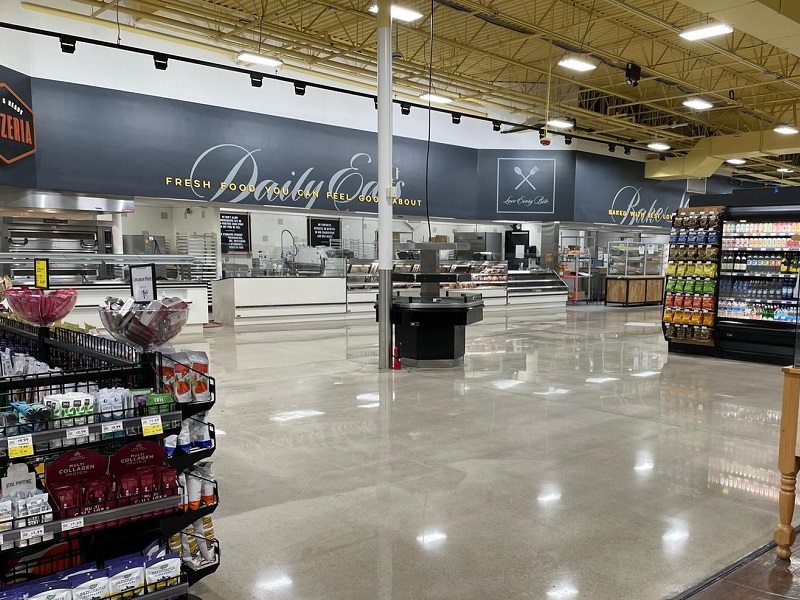
Commercial floors need to support far more than appearance. They may face constant foot traffic, carts, shelving, equipment, spills, and frequent cleaning. When comparing companies that polish concrete floors, facility managers should look at the condition of the slab, maintenance expectations, traffic levels, and the visual result they want before choosing a finish.
Polished concrete and resin flooring can both work well in commercial environments, but they achieve their results in different ways. One refines the existing slab, while the other creates a new protective and decorative layer over properly prepared concrete.
Start With the Existing Concrete
The slab is the foundation of either option. Old adhesives, coatings, cracks, stains, repairs, or uneven areas can change the preparation process and influence the finished appearance.
For spaces where a more uniform or decorative system is preferred, commercial epoxy flooring may provide greater control over color, texture, and overall finish. Polishing, by contrast, keeps more of the original concrete visible, including some of its natural variation and previous repair history.
Understand What Polishing Actually Does
Concrete polishing is a mechanical process. The surface is ground and refined with progressively finer tooling until the desired level of smoothness and sheen is reached.
The amount of aggregate exposed can vary depending on how deeply the floor is cut. Some projects keep a softer, more natural concrete appearance, while others expose more stone and create a higher-gloss finish.
Because the slab itself remains visible, every polished floor develops its own character. That can be an advantage in modern retail, restaurant, office, and industrial interiors where natural variation suits the design.
Think About Traffic and Workload
Not every commercial floor experiences the same type of wear. A boutique may see steady foot traffic, while a warehouse may also have pallet jacks, carts, or heavier equipment moving through the same routes each day.
Chemical exposure should be considered too. Restaurants, workshops, and service areas may encounter oils, cleaners, food spills, or other substances that influence the most suitable flooring system.
Identifying the busiest zones helps. Entrances, checkout areas, loading paths, and workstations often need more attention than low-traffic corners.
Compare Appearance Realistically
Polished concrete offers a natural, architectural look because the slab becomes part of the finished design. Color variation, aggregate, and repaired areas may remain visible after polishing.
Resin flooring can create a more controlled appearance. Solid colors, decorative flakes, or other finishes can help a business coordinate the floor with walls, displays, furniture, and branding.
Neither approach should be chosen from a small sample alone. Lighting, room size, surrounding finishes, and the condition of the actual slab can all change how the final surface looks.
Plan Around Cleaning Needs
Commercial flooring is usually cleaned more often than residential flooring. Dust, grit, spills, and debris can accumulate quickly in areas with customers or equipment.
Polished concrete can be straightforward to maintain when routine dust removal and suitable cleaning methods are used. Resin floors can also offer a seamless surface that reduces joints where debris might collect.
The best option is the one that fits the cleaning routine the business can realistically maintain. A finish that requires impractical care can become frustrating even if it performs well technically.
Consider Downtime Before Work Begins
Flooring projects can interrupt normal business activity, especially when the existing floor needs coating removal, repairs, or extensive grinding.
The schedule should account for preparation, repairs, finishing, curing where applicable, and the time required before normal traffic can resume. Businesses may need to move shelving, inventory, desks, or equipment before work starts.
In larger facilities, phased installation may be possible. Dividing the project into sections can help keep part of the space operational while work continues elsewhere.
Ask How Future Repairs Will Be Handled
Commercial floors continue to change after installation. Equipment may be relocated, layouts may change, or isolated damage may appear over time.
Before choosing a finish, ask how repairs or future refinishing would be managed. Polished floors may be reworked in selected areas, while coated systems may require compatible repair materials and careful color matching.
Understanding future maintenance makes it easier to compare long-term value rather than focusing only on the initial installation.
Conclusion
Polished concrete and resin flooring can both be practical commercial choices, but they serve different design and performance goals. Slab condition, traffic, chemical exposure, appearance, cleaning, downtime, and future maintenance should all influence the decision.
The strongest flooring plan begins with the building rather than the product. By evaluating how the space works every day and how much of the existing concrete should remain visible, businesses can choose a finish that supports operations while creating a professional, intentional environment.