

 The United States did not move from colonial protest to a fully formed national government in a single step. Independence was declared in 1776, but the political system Americans recognize today developed through years of war, debate, experimentation, and compromise.
Two documents are central to that story: the Declaration of Independence and the U.S. Constitution. They served different purposes. The Declaration explained why the colonies claimed independence from Great Britain, while the Constitution created a framework for governing the new nation.
Why the Declaration Came First
Tensions between Britain and its North American colonies had been building for years before 1776. Disputes over taxation, representation, imperial authority, and colonial self-government intensified after the Seven Years’ War. By the spring and summer of 1776, the question before the Continental Congress had moved beyond protest toward formal separation.
On July 2, 1776, Congress approved the Lee Resolution declaring the colonies independent. Two days later, on July 4, Congress adopted the text of the Declaration of Independence. The famous engrossed parchment was not signed by most delegates until August 2, with additional signatures added later.
What the Declaration Actually Did
A useful Declaration of Independence Explained approach begins by separating its political purpose from later mythology. The document did not create the Constitution, establish the presidency, or design the federal court system.
Instead, it announced separation and offered a public argument for that decision. The Declaration set out principles concerning equality, rights, consent, and legitimate government, then listed grievances against King George III before concluding that the colonies were free and independent states.
Those ideas became deeply influential, but the country still needed a working system of government.
The First National Framework Had Limits
During the Revolutionary era, the states operated under the Articles of Confederation, which Congress adopted in 1777 and which later became the first national governing framework.
The Articles created a confederation in which the states retained significant authority and the national government had limited powers. After independence was secured, weaknesses in that arrangement became increasingly difficult to ignore.
The Constitutional Convention of 1787 was originally called to address problems in the existing system, but the delegates ultimately produced an entirely new governing framework.
What the Constitution Changed
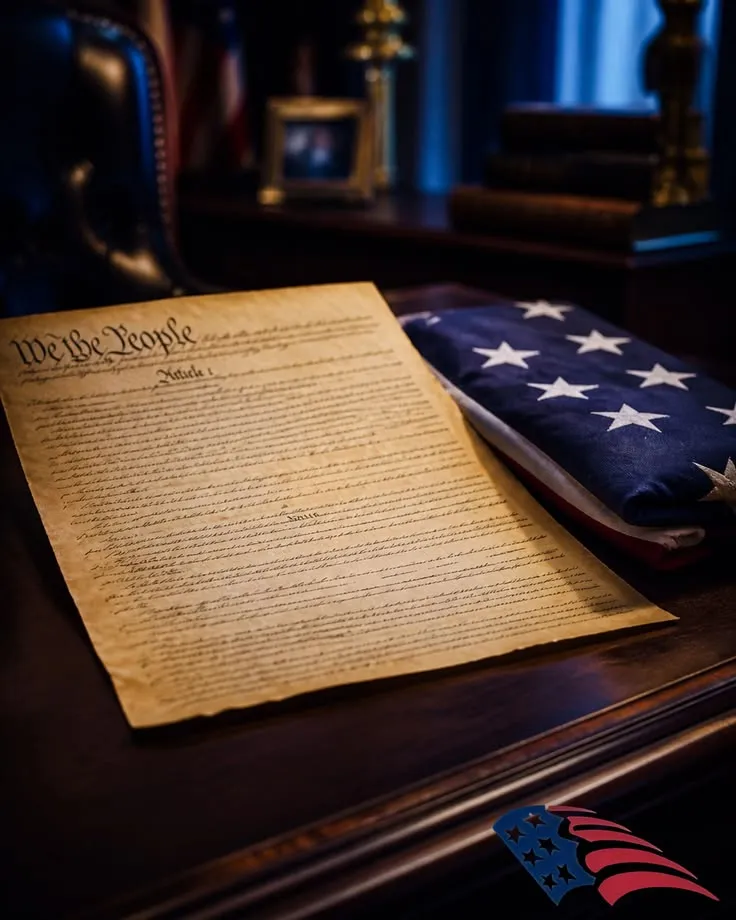
A clear US Constitution Summary should begin with the basic structure it created. The Constitution established legislative, executive, and judicial branches of the federal government and divided authority among them.
Delegates signed the Constitution on September 17, 1787. It then went to the states for ratification. The document specified that approval by nine states would be sufficient to establish the new government among the ratifying states.
This was not an uncontested process. Federalists generally argued for the new Constitution, while Anti-Federalists raised concerns about centralized power and the lack of an explicit bill of rights. Those debates helped shape the later adoption of the Bill of Rights.
Two Documents, Two Different Jobs
It is easy to place the Declaration and Constitution together because both are founding documents, but they should not be treated as interchangeable.
The Declaration addresses the legitimacy of independence and government by consent. The Constitution addresses institutional design: how laws are made, how executive authority works, how courts fit into the system, and how power is distributed within the federal structure.
One explains why separation was being claimed. The other explains how the new federal government would operate.
Why Reading the Original Documents Matters
Modern summaries are useful, especially for first-time readers, but primary sources reveal details that simplified descriptions often miss.
The wording, sequence, and structure of the documents show what their authors were addressing at particular moments in history. They also make it easier to distinguish later interpretations from what the texts themselves actually say.
The National Archives preserves both documents and provides transcripts, historical background, and high-resolution images for public study.
Conclusion
The founding of the United States was a process rather than a single event. The Declaration of Independence marked a decisive break with British rule, but independence did not automatically solve the problem of how thirteen states would govern themselves together.
The Constitution emerged more than a decade later from experience, disagreement, and negotiation over the weaknesses of the first national system. Reading the two documents side by side helps explain both the ideals associated with independence and the institutional framework built to govern the new nation.