

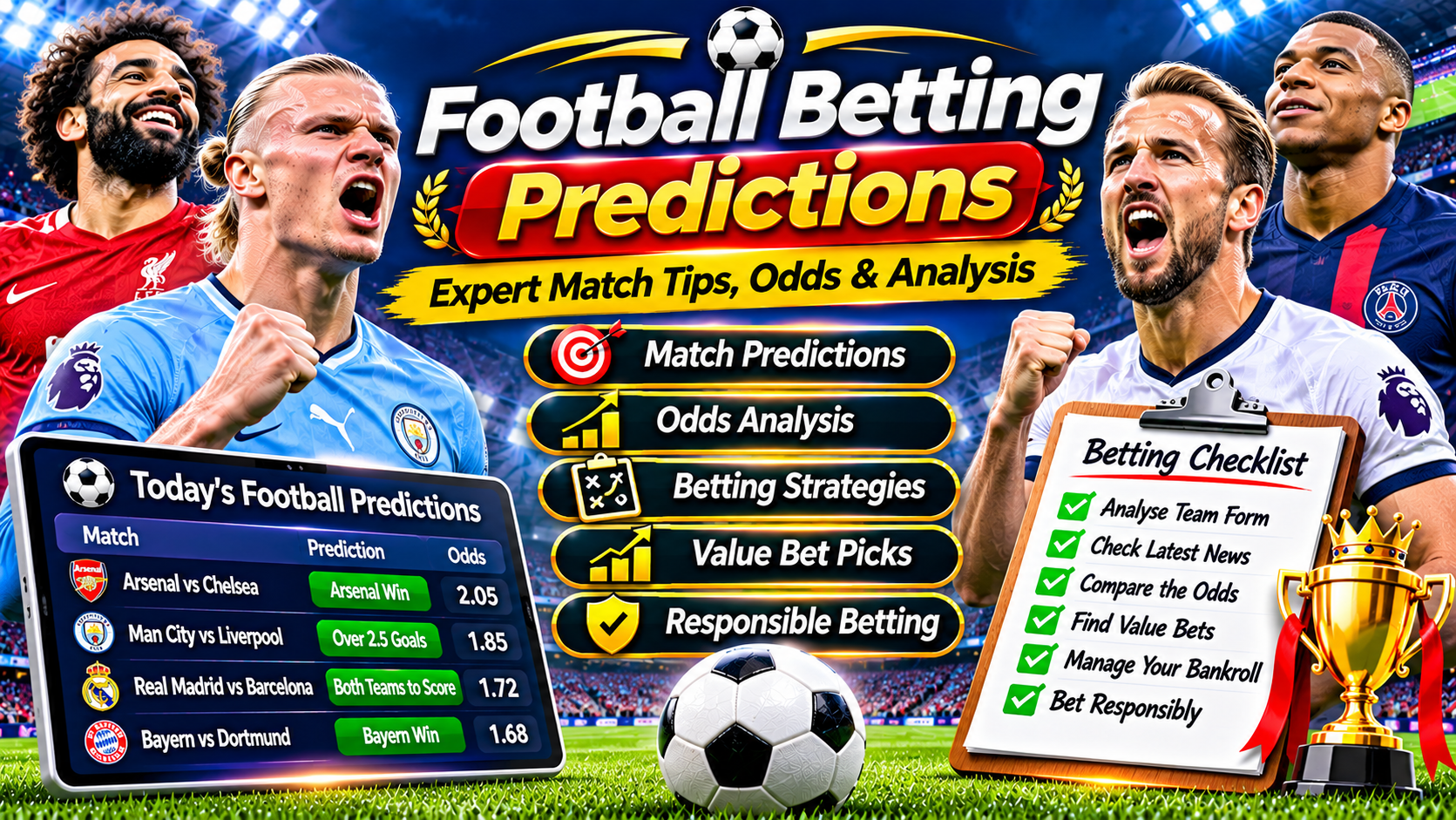
Build a repeatable match-evaluation checklist
A strong approach starts with a checklist you can apply to every fixture, regardless of league or reputation. Review recent form, but also dig into how the team plays when the game state changes, such as chasing a goal or protecting Football Betting Predictions a lead. Look for consistent patterns like starting lineup stability, pressing intensity, and whether the side creates chances in both halves.
Next, confirm matchup context by studying styles and personnel, not just standings. A possession team facing a high-press opponent may lose territory quickly, which affects their shot quality and set-piece opportunities. Compare defensive shape with the opponent’s primary attacking routes, such as wide deliveries, cutbacks from the half-spaces, or direct transitions. When you connect tactics to likely scenarios, your picks become easier to justify and easier to manage.
Use odds like a signal, not a verdict
Before choosing a market, translate betting odds into implied probabilities and compare them to your own view of the game. If the book prices a team as a heavy favorite but your assessment shows multiple paths for the underdog, you may have value in alternative markets. Pay attention to how lines move during the betting window, because sudden market shifts often reflect injury news, lineup changes, or sharper money. The goal is to spot when the market overreacts and when it corrects itself.
Focus on market efficiency by separating “strong favorite” matches from “uncertain” ones where the odds cluster tightly. In uncertain games, draw no bet, double chance, or handicap markets can reduce variance compared to straight results. In high-variance games, goal totals and team totals often provide clearer edges than trying to predict the exact winner. Always compare similar markets—like over/under versus both teams to score—to see whether your reasoning aligns across them.
Target goal markets with scenario thinking
Goal betting becomes more practical when you model likely game scripts rather than guessing totals blindly. Consider whether both teams will attack early, whether one side likely controls possession, and whether the defensive setup invites space behind fullbacks. For example, if a team struggles to defend transitions, an opponent that wins the ball high may create higher-quality chances even if possession is modest. This is where goal markets can reflect tactical reality more directly.
For team-based angles, look at where goals are most likely to originate: open play, set pieces, or penalties. If a team produces many shots from central areas and also concedes dangerous chances through the middle, an “over” on shots-on-target or goal totals may be more defensible than betting low-risk narratives. If both sides rely heavily on one or two creative players, injuries or rotation can swing goal expectancy sharply. Use these clues to decide whether you prefer an over/under line, both teams to score, or a safer “at least one team scores” approach.
Manage risk with bankroll rules and disciplined staking
Even a strong betting plan can face losing streaks, so risk control matters as much as prediction quality. Set a fixed staking rule like a small percentage of your bankroll per bet, and keep stakes consistent until you have a clear reason to adjust. Avoid chasing losses by increasing stakes after setbacks, because this turns variance into a long-term problem. Instead, treat each bet as an independent decision backed by your checklist and odds comparison.
Use limits to protect yourself from overexposure by capping the number of bets per day and the total amount risked per matchday. If you’re building multiple selections, check correlation so you don’t accidentally double your exposure—for instance, pairing an over on goals with both teams to score can be tightly linked. Consider using partial hedges when a bet is threatened by early lineup changes or unexpected tactical shifts. Responsible betting also means setting a session stop time and reviewing results objectively rather than emotionally.
Conclusion
Use a checklist that ties team style, matchup context, and lineup factors to realistic game scenarios. Then compare your view to market odds, watching for mispricing and lineup-driven volatility that can change the expected flow of the match. Finally, aim for practical markets like goal totals and team totals when your tactical reasoning supports them, and keep staking disciplined to manage risk. When you combine scenario thinking with responsible bankroll rules, your betting becomes more consistent and easier to audit over time. If you keep improving your process—especially your interpretation of odds and team news—you’ll build a stronger edge across future fixtures.
1 comment
I’m always excited to discover new casino options, and this kind of unbiased overview helps a lot. The brand discovery angle is especially useful for me because I want to understand how a site’s slot library, bonuses, and payout transparency really stack up before I try anything. If you’re covering
Latest Slot Reviews