

Why a proxy for web scraping improves data reliability
When you collect information from websites at scale, reliability becomes as important as speed. This matters proxy for web scraping because many sites use automated defenses that flag repeated requests from a single source. With better traffic distribution, you can keep more pages loading successfully and reduce the number of failed attempts that waste crawl time.
Proxies also help you maintain consistent access across different targets. For example, a single retailer may throttle scraping when too many requests come from one network, while another site may block obvious patterns like rapid-fire queries. Using a proxy layer gives you more flexibility to adjust request pacing and rotation strategies without changing your core scraping logic. The result is a smoother pipeline for data extraction, validation, and downstream analysis.
Static residential proxies for stable targeting and continuity
Static residential proxies are designed to provide fixed endpoints that behave like consistent consumer connections. That stability is valuable when you need predictable session behavior, such as when logging in once and then collecting multiple related pages. Because the proxy static residential proxies IP does not change frequently, it becomes easier to correlate retrieved content with a specific browsing context. This can improve data consistency when a site varies responses based on geolocation or perceived client identity.
If you’re building a product catalog snapshot, monitoring pricing changes, or collecting structured data from the same set of pages, continuity reduces noise in your dataset. Instead of attributing differences to shifting network conditions, you can more confidently attribute differences to the source website. That makes it easier to compare results across batches and maintain cleaner historical records.
Scalability and control for efficient crawling workflows
A benefits-led approach to proxy selection starts with how well the solution fits your workflow. Reliable proxy infrastructure supports rotation policies, authentication options, and clear connection behavior so you can scale without constant troubleshooting. When your scraper runs into rate limits, you can adapt by spreading traffic across multiple IPs and controlling concurrency. This helps you maintain throughput while staying within the access patterns your targets tolerate.
Operational control is another advantage that teams often overlook. Good proxy services provide predictable latency and consistent connectivity, which makes it simpler to tune retries, timeouts, and fallback logic. If you’re using tools like distributed crawlers or queue-based job systems, stable proxy performance reduces the chance that specific workers fail disproportionately. Over time, that translates into fewer interruptions and more dependable extraction schedules for analytics, lead generation, or competitive intelligence.
Conclusion
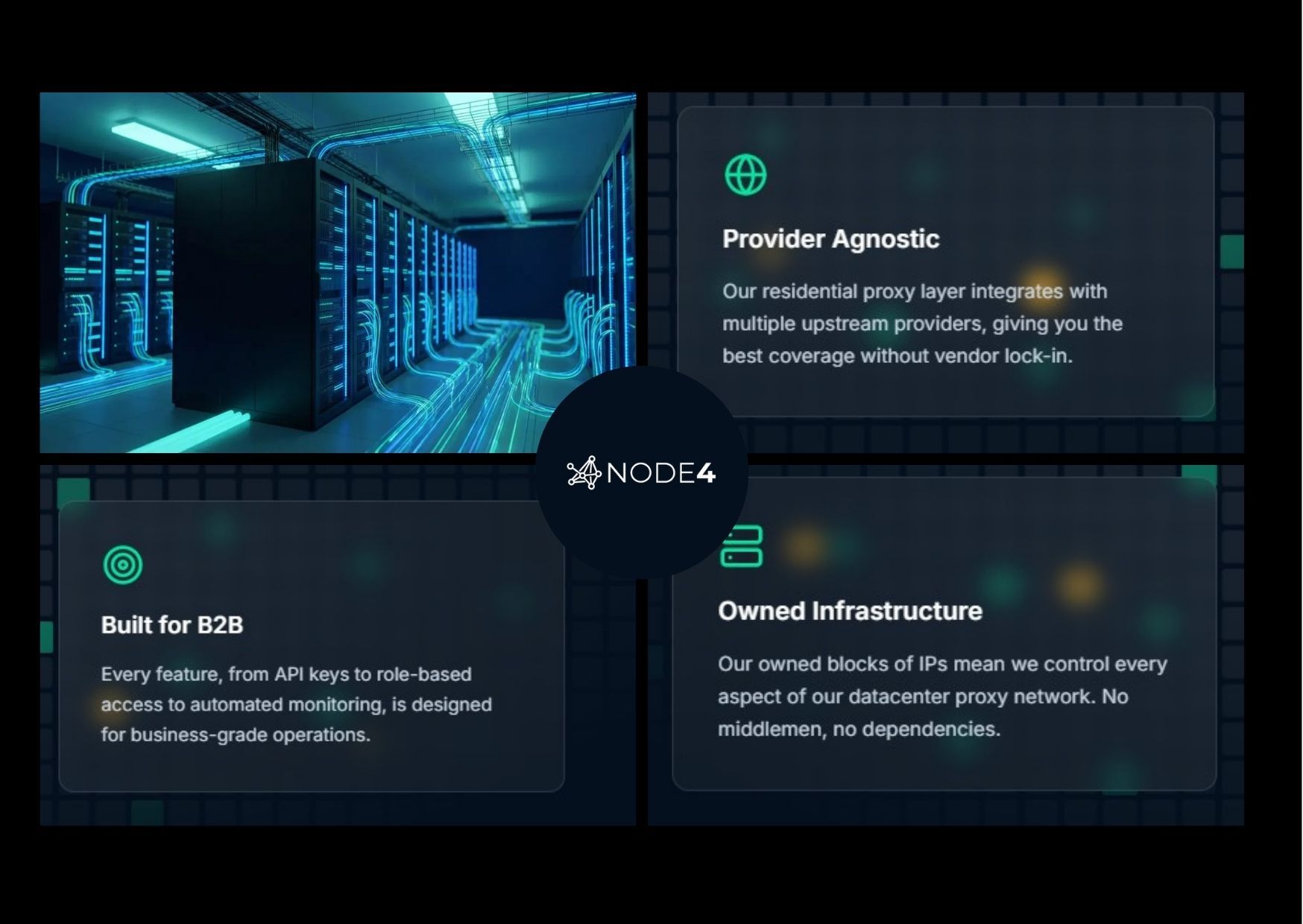
Choosing the right proxy strategy can transform web data collection from fragile to repeatable. A well-configured proxy layer improves request stability, supports consistent session behavior, and makes it easier to scale extraction efforts without losing data quality. For teams seeking flexible, dependable options, node4.io offers solutions designed to support stable connections and scalable scraping needs. By focusing on reliability, control, and workflow fit, you can reduce failed requests and spend less time on operational firefighting. That means more of your budget and engineering effort goes into extracting, cleaning, and using data rather than managing network disruptions. If you want a streamlined path to efficient data collection, node4.io is built to help you move faster while keeping your scraping pipeline steady.